
In the first quarter of 2026, almost 17 percent of retail sales were performed online. Of online sales in 2025, around 40 percent were completed through Amazon, the world’s leading marketplace app. If your business wants to profit from connecting vendors with customers, these online marketplaces present a more significant opportunity than ever. That makes building a marketplace app an enticing prospect if you’re willing to take the leap.
Where do you start, and what is the marketplace app development cost required to get yours off the ground? These apps offer the potential for a high long-term payoff, but they typically require a sizable up-front investment.
Let’s explore some crucial considerations before you build a marketplace app, including potential expenses and powerful tools you can use to cut up-front costs.
What are marketplace apps?
Marketplace apps are digital platforms designed to connect independent vendors with potential customers. Think of it like a farmers market: Your app is where third-party businesses set up their booths, and customers can browse as they please.
Top examples of marketplace apps include
- Amazon
- Etsy
- eBay
- Gumtree
- Temu
These apps typically work within a central management system that handles operations and vendor relationships. Most of these apps have clear rules for vendors regarding commission percentages and service standards as well as established processes for listing and selling products.
Marketplace apps also typically include key features such as
- User profiles
- Product listings
- Search functionality
- Payment integrations
- Review systems
These features allow users to easily find, buy, repurchase, and review the products they want across your platform. Some marketplaces offer more advanced features, but others opt for a simpler layout to reduce complexity and development spend.
As the owner of a marketplace app, you can make money in a few different ways:
- Fees per transaction
- Ad revenue
- Membership fees (for vendors and customers alike)
- Advanced feature fees
- Lead generation fees
- Featured ad fees
There are various reasons to create a marketplace app. Some businesses see a gap in their niche industry and seize the opportunity to tap into an underserved customer base within an existing structure. Others may simply want more easily scalable sales operations, particularly if they’re looking to reduce the need to hold inventory (similar to dropshipping).
While building a marketplace app can help you capitalize on the growing online retail trend, you must understand the potential costs before you decide on your app’s final structure.
Factors affecting development costs
Having a developer build your marketplace app may seem like the easiest way to get up and running, but working with a professional developer is still a complex process, with many elements to consider that can affect your bottom line.
Let’s look at some of the top factors that will affect your marketplace app development costs and why they could raise your bill.
Platform choice
Although one of the smaller costs in the app development process, the platform you choose as the base of your marketplace app will still affect your overall budget. Android apps, for example, require a one-time $25 Play Store fee to Google for your initial listing. Apple, on the other hand, requires you to pay $99 per year for an Apple Developer Program membership.
You can also forgo the mobile app route and publish your marketplace exclusively through a website. In this case, though, you will likely need to pay hosting, domain, and other fees. You may choose to do both or stick to a single platform, depending on your budget.
Feature complexity
Although the features you include in your marketplace app can be central to its functionality, offering more features also means paying higher costs. Typically, app developers will quote you per feature; different capabilities require varying levels of work.
The quantity of features you integrate into your app will determine its complexity and ultimately play a key role in your costs. Your cost per feature may range from $3,000 to $8,000, depending on the feature and your developer’s hourly rate.
User interface and experience
User interface (UI) and user experience (UX) development is one of the most involved stages of your app development. UI and UX will have a profound impact on how well vendors and shoppers engage with your marketplace, so developers will take their time ensuring everything is just right.
That being the case, these costs can make up a significant portion of your final budget, but they can also vary depending on the design route you take. If you’re willing to work from a template, your UI and UX costs could range from $5,000 to $15,000. However, for custom development, these costs could more than double to $30,000-plus.
Custom development will offer the most control and novelty for your app’s design. But building an app from scratch requires more hours and expertise, a common cause of a higher development invoice.
Geographical factors
Your developing specialists’ location could also have a sizable impact on your overall app costs. Because of factors such as regional costs of living and currency exchange rates, specialists in different countries often charge different rates. For example, developers in North America or Western Europe often charge more per hour ($50 to $180 per hour) compared with software developers in South America and Asia ($15 to $80 per hour).
Unless you’re committed to working with a local developer or a developer from a certain region, outsourcing this work to a less expensive country can be a quick way to cut your overall costs.
Backend infrastructure
The framework and technology involved in the back end of your marketplace app are the engine that will keep it running smoothly. Backend developers build out data processing and management capabilities, business logic, and user request processing features using several tools.
Both the tools your developers use and the complexity of your app’s back end will determine the hours and cost required to build it properly. Depending on complexity, these costs can range from $17,000 to $35,000.
Your exact costs will vary depending on numerous factors, but complexity lies at the heart of every cost. Part of what will determine your app’s complexity is the type of online marketplace you’re trying to create.
Types of online marketplaces
Online marketplaces are typically distinguished by two key characteristics: business model and participants. Understanding the type of marketplace you plan to create is a crucial first step before contacting a developer. Knowing this information before you get started will help your developer quote you more accurately on their costs, guide your project to meet your expectations, and create a successful app.
There are two core business models that marketplaces fall into:
- Vertical: Narrowly focused marketplaces that center on a particular industry or niche product (StockX, Chegg, Zillow, etc.)
- Horizontal: Marketplaces that offer access to goods and services spanning several categories (Amazon, Temu, etc.)
Once you have a business model in mind, you can determine what type of participants you would like to target. Not every online marketplace is designed for connecting businesses to consumers. There are a few key options to choose from:
- B2B: These marketplaces connect businesses directly with other businesses that specialize in selling goods or services to companies rather than customers. Examples of these marketplaces include Upwork Enterprise and Alibaba.
- B2C: These marketplaces serve as a digital space for businesses to connect with interested customers. Amazon is the most well-known of this marketplace model, but other examples include Temu and the App Store.
- Consumer-to-consumer: These marketplaces connect private individuals who offer goods or services with consumers seeking them. This model differs from B2C in that vendors are allowed to sell their product as themselves, rather than as a business. Examples of these marketplaces include eBay, Craigslist, Poshmark, and Facebook Marketplace.
- Auction platform: This is a specialized marketplace that adds a bidding feature for products, rather than simple fixed-price transactions. One of the most well-known examples of this subtype is eBay.
Each of these platform types has different features and development needs. As a result, each will produce varying marketplace app development costs.
How to determine the cost of developing a marketplace app
What will it cost you to build the marketplace app you envision? Determining your marketplace app development cost comes down to a simple equation:
marketplace app development cost = total development hours × developers’ hourly rate
Factors such as feature additions and increased complexity will drive up hours and elevate your costs as a result. When looking for where to save, consider which items take up the most of your developer’s time and look for ways to streamline those hours.
How much does it cost to build a marketplace website?
The exact costs you’ll incur while building a marketplace website can vary widely depending on functionality, complexity, and other key factors. Because developer wages and working-hour estimates can also come in a broad range, it’s best to estimate your cost using simple categories.
Here are potential cost ranges for apps of basic, medium, and complex construction:
- Basic: $40,000–$80,000; includes simple features such as basic checkout and product listings
- Medium: $60,000–$150,000; includes features such as advanced search and payment processing
- Complex: $100,000–$300,000; includes features such as AI recommendations and real-time analytics
What about individual cost factors? Use this high-level overview of the costs we mentioned previously as a guide to explore where you may be able to trim your budget.
| Factor | Potential costs |
|---|---|
|
Platform fee |
$25 or $99 per year, depending on platform |
|
Feature additions |
$3,000–$8,000 per feature, depending on complexity |
|
UI/UX design |
$5,000–$30,000-plus, depending on custom work |
|
Developer wages |
$15–$180 per hour, depending on location, specialty, and experience |
|
Back end |
$17,000–$35,000, depending on complexity |
These costs can add up quickly, even for the most basic marketplace apps. That’s why a tool that can help you track (and potentially cut) these costs is essential to maximizing your app development project’s overall value.
Use Jotform to cut and manage marketplace app development costs
The app development process (much like any outsourced business project) comes with a lot of paperwork. Approval forms and expense tracking documents move between you and your developer in a seemingly constant flow. But just because these forms are an inevitable part of any app development process doesn’t mean they have to be a headache.
With Jotform, creating and organizing forms for your marketplace app development project is simple. You can customize the forms you need from scratch using Jotform’s drag-and-drop Form Builder, or you can save time and start from a template, including expense tracking form templates.
You can also use Jotform for project management tracking and budget approval or expense approval workflows. Beyond forms, Jotform’s wide range of finance workflow templates and finance sheet templates can help you better manage your project data and automate the approval process to keep your project on track. These tools can improve communication among teams, enhance transparency, and reduce project management costs.
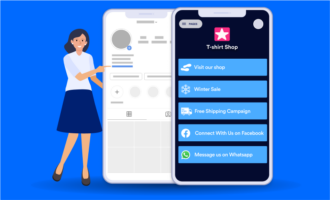
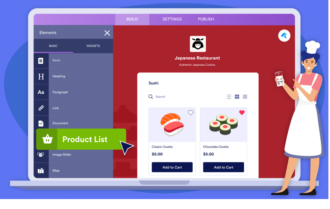
Jotform isn’t just an organizational tool; it can also help you start building your marketplace app yourself, with no need for a developer. Through Jotform Apps, you can build your own no-code apps in a matter of minutes for free.
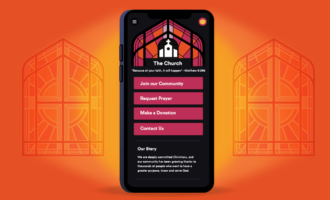
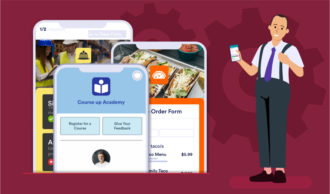
Start by using one of more than 3,500 free app templates as the base for your marketplace. Then customize and share, with options including social media platforms, direct links, and QR codes. You can also regulate app access using advanced permission settings to prevent unwanted changes and download your new app directly to your smartphone, tablet, or computer.
Marketplace apps are rapidly becoming the future of retail. By staying aware of your costs, you can properly budget and prepare to develop the app of your choice. If you’re looking for help reducing costs and logistical headaches along the way, find out more about how Jotform’s robust platform can streamline your development process.
FAQs
Although there is no guarantee that a mobile app will make $3,000 a day, there are a few steps you can take to help reach that goal. Keep in mind that the economics behind your mobile app (fee structure, subscription model, target audience, etc.) will also directly impact the likelihood that you’ll reach this financial milestone.
To help hit your goal, consider following these steps:
- Choose a high-value niche for your marketplace.
- Build a lean system that can launch quickly.
- Deploy an aggressive marketing strategy.
- Continually optimize your revenue and retention strategies.
If applied correctly, these tips may help boost your mobile app’s revenue to $3,000 a day under the right conditions.
Marketplace apps can make money from a few different sources, including the following:
- Fees per transaction
- Ad revenue
- Membership fees (for vendors and customers alike)
- Advanced feature fees
- Lead generation fees
- Featured ad fees
Many of these structures will provide ongoing revenue streams, but the format you choose will likely depend on your marketplace app’s framework and functionality.
Building a marketplace app can be highly challenging, which is why many businesses partner with professional developers. These projects can require significant hours of specialized work, leading to high costs for increasingly complex projects. However, you can create more basic mobile apps easily with platforms such as Jotform Apps, which streamline the app creation process into a user-friendly experience.
This article is for entrepreneurs, startup founders, ecommerce business owners, product teams, and anyone who wants to understand marketplace app development costs and budget-friendly ways to build or manage an online marketplace.































































































Send Comment: